
Beyond Words: The Interpreters Driving Vissel Kobe’s Success
Posted
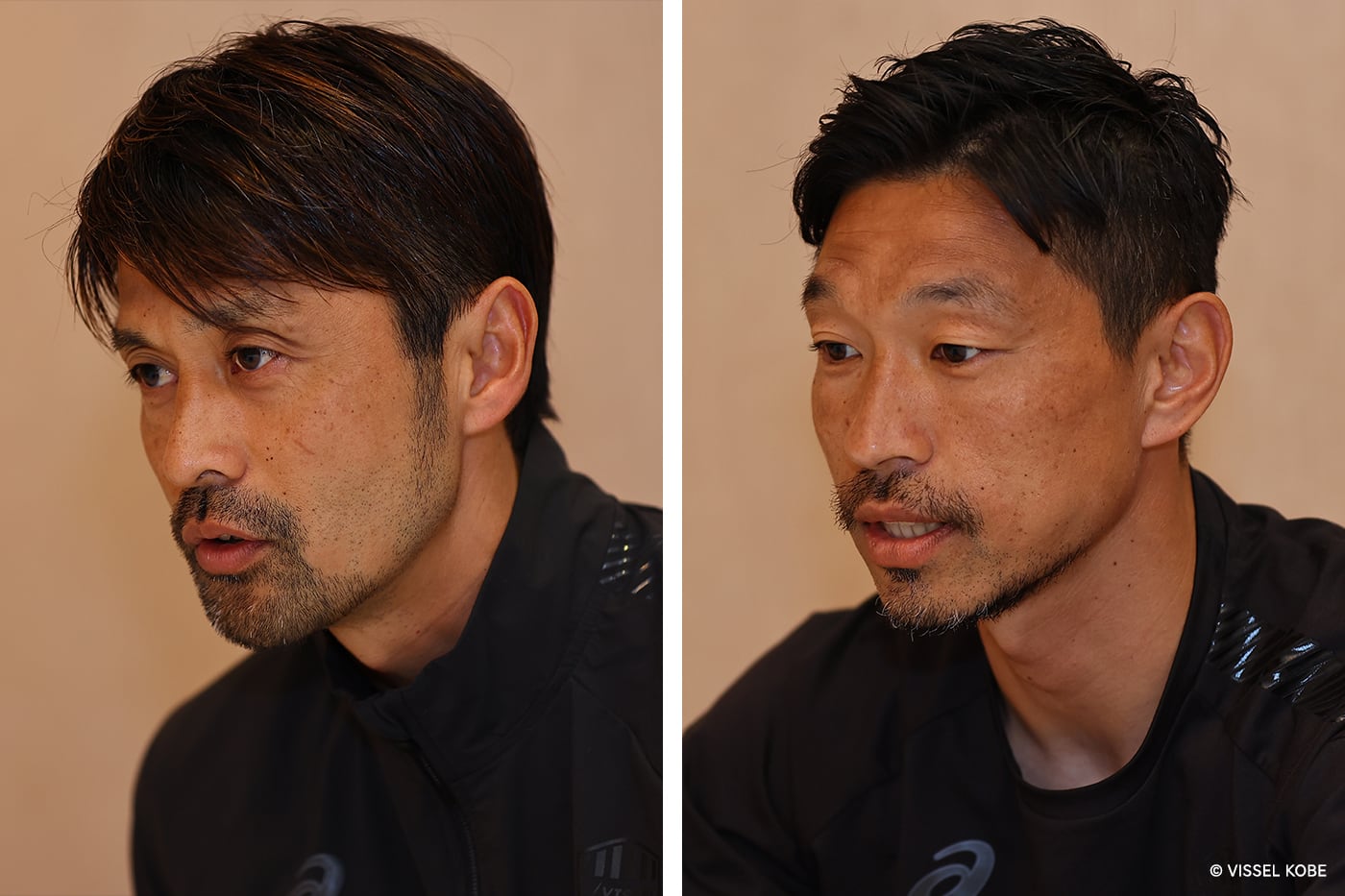
Because Vissel Kobe has players whose native languages are Portuguese, English, and Spanish, the club employs multiple interpreters. An interpreter's role goes beyond simply facilitating conversation between players; it also involves understanding and being there for each individual player, understanding players in different positions with different personalities and different backgrounds. To learn about the importance of authentic connection across language barriers, we spoke with Eiji Kumon, Vissel Kobe’s Portuguese-language interpreter, and Norikazu Murakami, the English-language interpreter.
Kumon and Murakami both say that they focus on conveying things accurately, and to develop a real understanding of the players.
“In order to convey the meaning of what someone has said so that there isn’t any misunderstanding, I have to judge whether a direct translation of the speaker’s words is appropriate, or whether something adapted a little to feel more natural in Japanese would be better. To make that judgment in an instant, I need to have a deep understanding of the player’s background, which means daily communication is essential.” (Kumon)
“Knowing their personality, their habits in using words, and which region they come from is also important. Even people from the same country who speak the same language are influenced in their speech by the regional characteristics of where they lived. You really need to start by getting to know the player well, and I sometimes ask them why they chose a particular word or expression. I feel that it’s easier to translate when you’ve already communicated with players beforehand.” (Murakami)
The work of an interpreter goes beyond the role of connecting conversations between teammates. It also calls for supporting players’ private lives so they don’t feel lonely in a foreign country.
“Whether a player’s private life is fulfilling has an impact on their play,” Murakami says. Life in a foreign country brings stress to even daily tasks like shopping or eating out. To reduce that stress, Murakami will sometimes always be by a player’s side right after they join the team. He also notes that players are most likely to get homesick when they can’t speak their native language. He tries to alleviate their loneliness by proactively talking to them in their mother tongue.
Murakami also says: “I feel like the role of communicator is a big part of being an interpreter. When the emotions of the two people having the conversation are running high, I try to understand what they are trying to say and then choose simple words instead of directly translating the words. The reason I’m here is to facilitate smooth communication. I think having a human mediate conversations is what makes that possible, as opposed to just using a translating machine.”
Kumon also says he’s conscious of not becoming “a loudspeaker.” Especially when emotions are running high, people can get careless about the kind of words they use. By placing himself in the middle, he tries to soften harsh words and create time for players to compose themselves. “The culture and way of thinking between foreign players and Japanese people are completely different. If I think that saying a particular word will just result in the same word bouncing right back, I’ll talk with the player before I translate. We’re a family. Because I don’t want to break up the team, there are many cases where I have to be careful to not just blindly translate and be a yes-man.” (Kumon)
The presence of interpreters with strong communication skills is indispensable for the ideal performance of foreign players. Of course, Vissel Kobe also has many players who have experience playing for overseas teams, and you will often see players communicating directly with each other. “There are many scenes where Portuguese, Spanish, English, and Japanese all fly around at once. I hear them talking not just about soccer but also chatting about personal things to get to know each other.” (Kumon)
It might feel daunting to someone not used to speaking another language, but Kumon says, “It’s okay to make mistakes. What matters is stringing together words you know, digging through your memory of the grammar you know, and just trying to speak another language so you can reach out to someone―that’s what the other person will be happiest to receive, and they’ll understand. It’s all about making that effort.”
The work of an interpreter can be likened to building a bridge over the barriers created by differences in language. But it seemed that what was essential to make communication work was not merely using a common language, but wanting to understand what the other person is saying. Kumon and Murakami describe their team as a “family,” and they work hard not just to convey words, but to share feelings beyond words. Their presence is undoubtedly one of the pillars that supports the team.
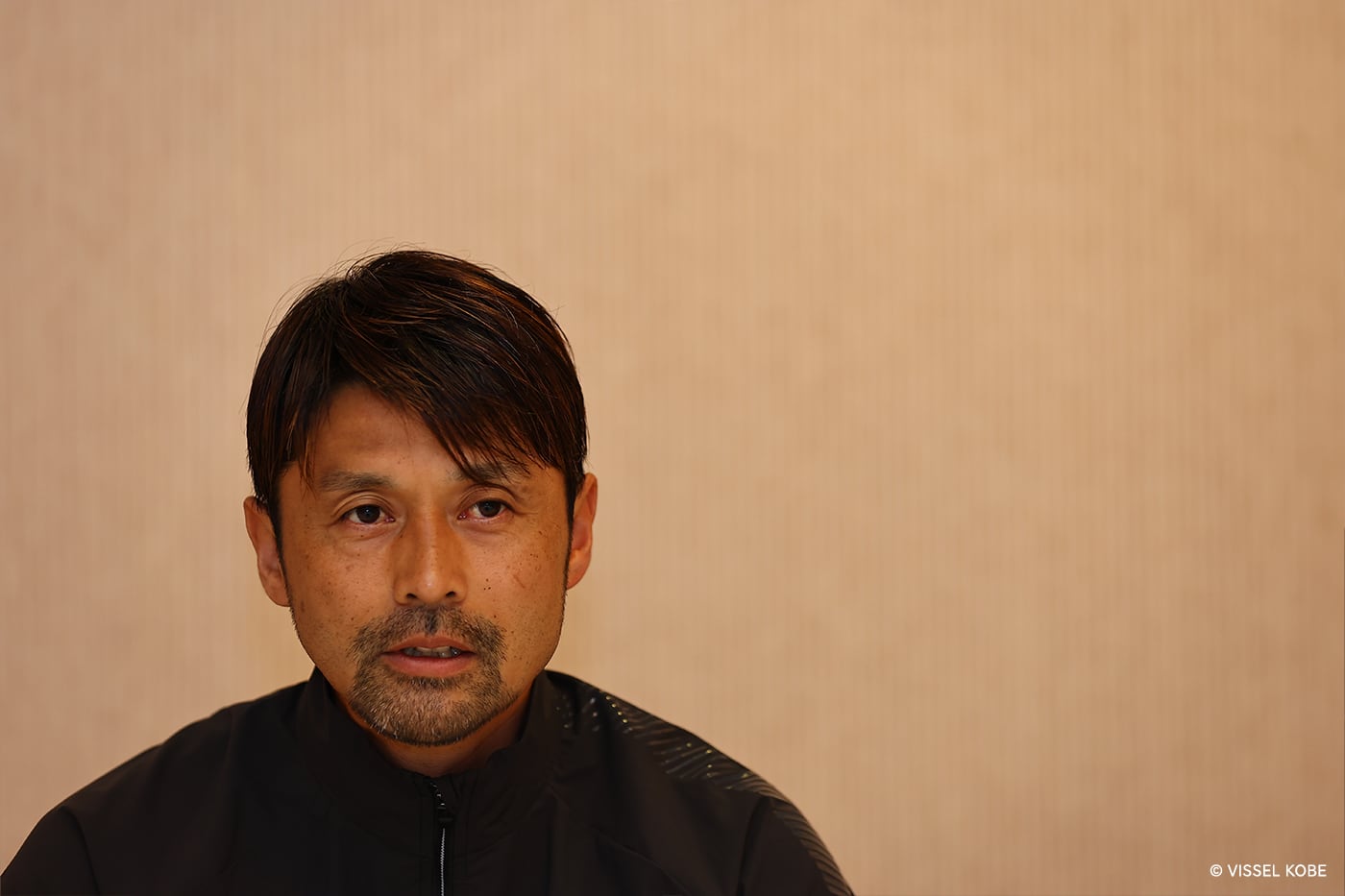
Eiji Kumon, the Portuguese-language interpreter.
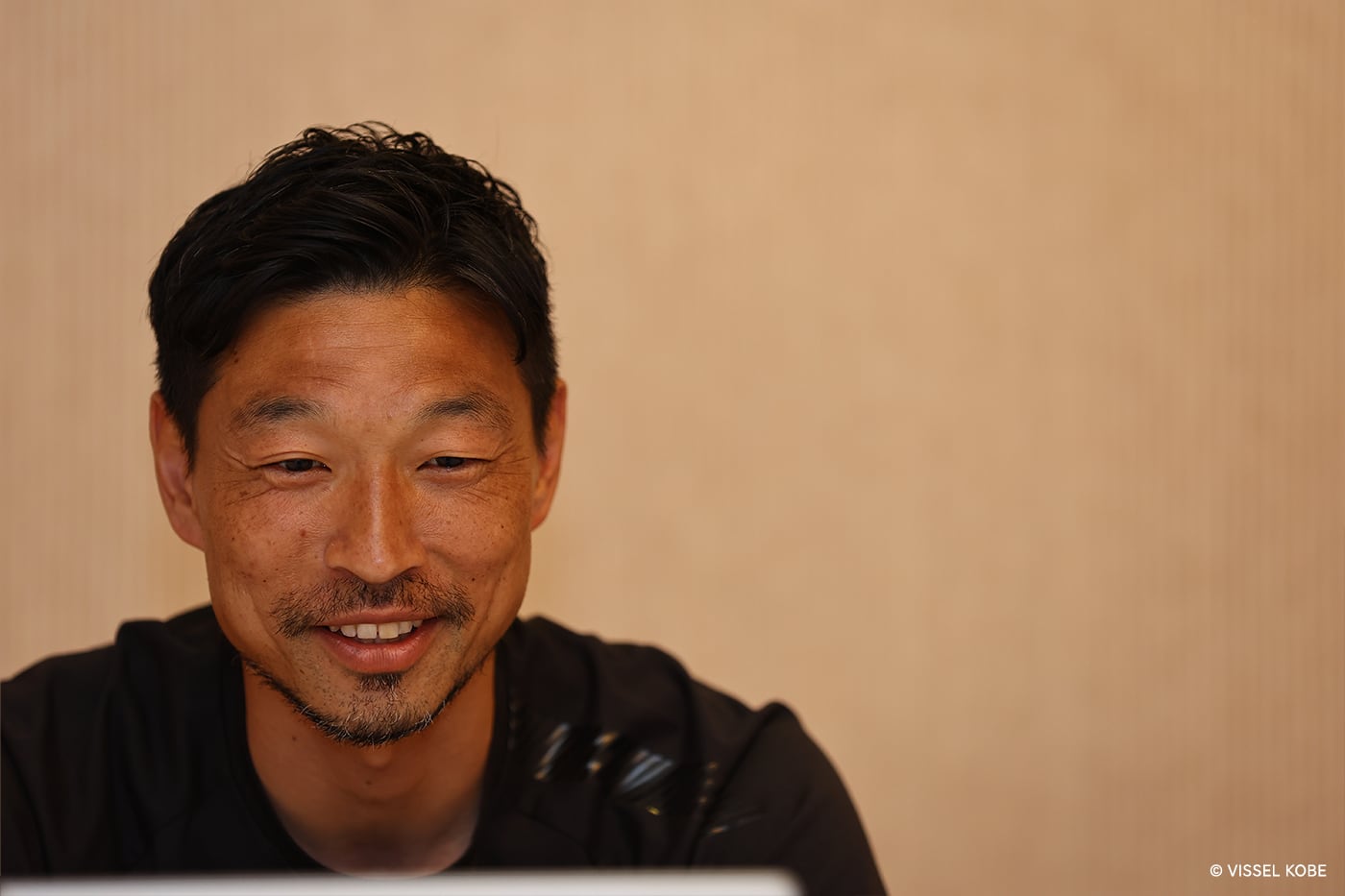
Norikazu Murakami, the English-language interpreter.
INTERVIEW & TEXT: Chiharu Abe
-
Related Articles
Let's learn Vissel Kobe's training techniques from the conditioning coach!
-
Related Articles
What kind of place is the "Mikitani House", a dormitory for young players nurturing the "future" of Vissel Kobe?

-
Related Articles
"The Manager's high expectations for the team and players become the source of their strength."The coaching staff of Vissel Kobe discuss the factors behind the V-shaped recovery.
Recommended Articles

Choose your language for syncSPORTS by Rakuten
Our services are provided within the region and laws of Japan
We provide translations for your convenience.
The Japanese version of our websites and applications, in which include Rakuten Membership Rules, Privacy Policy or other terms and conditions, is the definitive version , unless otherwise indicated.
If there are any discrepancies, the Japanese version shall prevail. We do not guarantee that we always provide translation. Certain features or messages (including customer services) may not be available in the selected language.
Powered by Rakuten Al
Enjoy syncSPORTS by Rakuten in English!
Our services are provided within the region and laws of Japan and we provide translations for your convenience. The Japanese version of our websites and applications, in which include Rakuten Membership Rules, Privacy Policy or other terms and conditions, is the definitive version , unless otherwise indicated. If there are any discrepancies, the Japanese version shall prevail. We do not guarantee that we always provide translation. Certain features or messages (including customer services) may not be available in the selected language.
Read usage guidePowered by Rakuten Al
Popular Tags
- #Baseball
- #Vissel Kobe
- #Rakuten Eagles
- #Soccer
- #Basketball
- #Athlete's Essentials
- #Second Career for Athletes
All Tags
- #Hiroto Kobukata
- #Wang Chih-Hsuan
- #Chen Chen-Wei
- #Huang Tzu-Peng
- #Yuya Kishimoto
- #Yang Po Hsiang
- #Tsubasa Yoshino
- #Masahiro Ehara
- #Haruto Nakagomi
- #Kazuto Tokuyama
- #Futo Nagamori
- #Blind Soccer®
- #Rui Muneyama
- #Parasports Experience Park by Rakuten
- #Vissel Sereia
- #Ceng Hao-Ju
- #Tohoku Golden Angels
- #Masahiro Tanaka
- #Sports for Everyone
- #Kiaki Miura
- #Rakuten SUPER GAME
- #Future Festival
- #Rakuten Optimism
- #Horse Racing
- #Rakuten Keiba
- #Keirin
- #Rakuten K Dreams
- #Yuya Ogoh
- #Itsuki Murabayashi
- #Haruya Ide
- #Kakeru Yamauchi
- #Daisuke Nakashima
- #Fumiya Kurokawa
- #Ryuya Taira
- #Takahisa Hayakawa
- #Stadium Beer Girls
- #Rakuten SPORTS ZONE
- #Rakuten GORA
- #Golden State Warriors
- #UPRISING TOKYO
- #WUBS
- #Rakuten Girls
- #NBA
- #UPRISING SPARK
- #WIND AND SEA
- #Golf
- #Baseball
- #Basketball
- #Soccer
- #Rui Machida
- #Takahiro Norimoto
- #Daichi Suzuki
- #Lisa Bayne
- #Kazuhisa Ishii
- #Vissel Kobe
- #Rakuten Monkeys
- #Chen Kuan-Yu
- #Lin Xiang
- #Hime
- #Yuki Matsui
- #Kenji Furukubo
- #Hotaru Yamaguchi
- #Gotoku Sakai
- #Yuya Osako
- #Yoshinori Muto
- #Daiya Maekawa
- #Takayuki Yoshida
- #Rakuten Eagles
- #Team Staff
- #Para-cycling
- #Kazuhei Kimura
- #Mari Miyano
- #Ginji Akaminai
- #Dance
- #Skateboarding
- #Cheerleading
- #Andres Iniesta
- #Yuto Horigome
- #Lin Li
- #Chu Yu-Hsien
- #Liao Chien-Fu
- #Sayaka Imai
- #Sae Takemoto
- #Stephen Curry
- #Rakuten Super Baseball Game
- #Kai King
- #Shun Murakami
- #Athlete's Essentials
- #Surfing
- #Tokyo Philharmonic Orchestra
- #Daichi Deguchi
- #Rakuten Super Match
- #Tomoaki Makino
- #Katsuya Nomura
- #Daiju Sasaki
- #Takahiro Ohgihara
- #Stadium Food
- #Takuhiro Nakai
- #Parasports
- #Charity
- #Javelin Throw
- #Ryo Hatsuse
- #Chris Sasaki
- #Takuya Iwanami
- #Yuki Honda
- #Mitsuki Saito
- #Sidmar Antônio Martins
- #Shota Arai
- #Dreams Come True
- #Kai Toews
- #Seiryu Uchi
- #Wings to Dreams
- #Kosei Shoji
- #Mitsuki Hidaka
- #Tomo Sugawara
- #Kunie Kitamoto
- #Hikaru Ohta
- #A Greener Future
- #Hideshiro Minami
- #Circularity Assessment
- #Nanaka Fujisawa
- #Tatsuki Koja
- #Seiya Ohuchi
- #Nat Young
- #Momohei Yabushita
- #Kei Kobayashi
- #Snowboarding
- #Shoma Fujihira
- #Hakuto Kitayama
- #Taisei Miyashiro
- #Tetsushi Yamakawa
- #Tsuyoshi Yasuda
- #Steve Kerr
- #Takero Okajima